Pipe diameter upgrading from existing 150mm to 200mm diameter
at Service Lane for
No. 24& 24B Granville Road
2025-2026
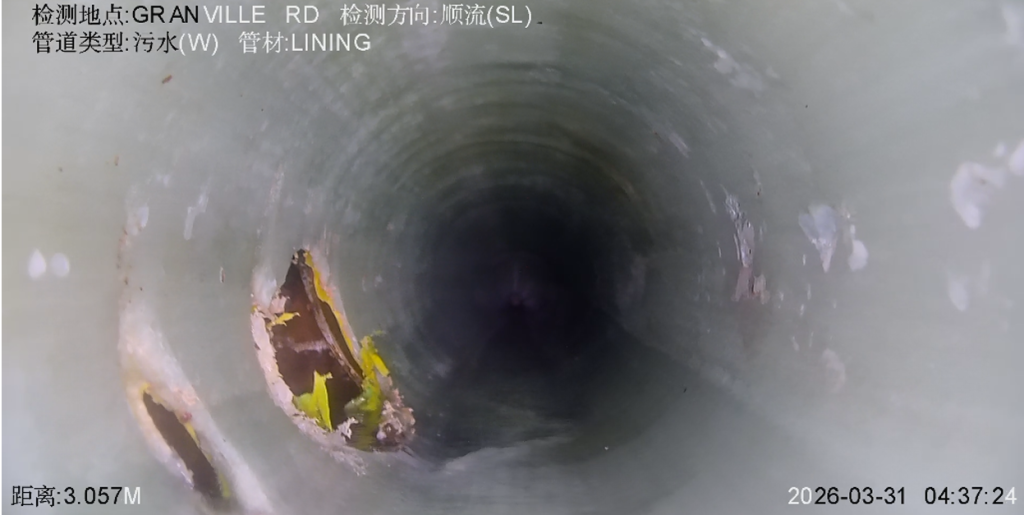
Before
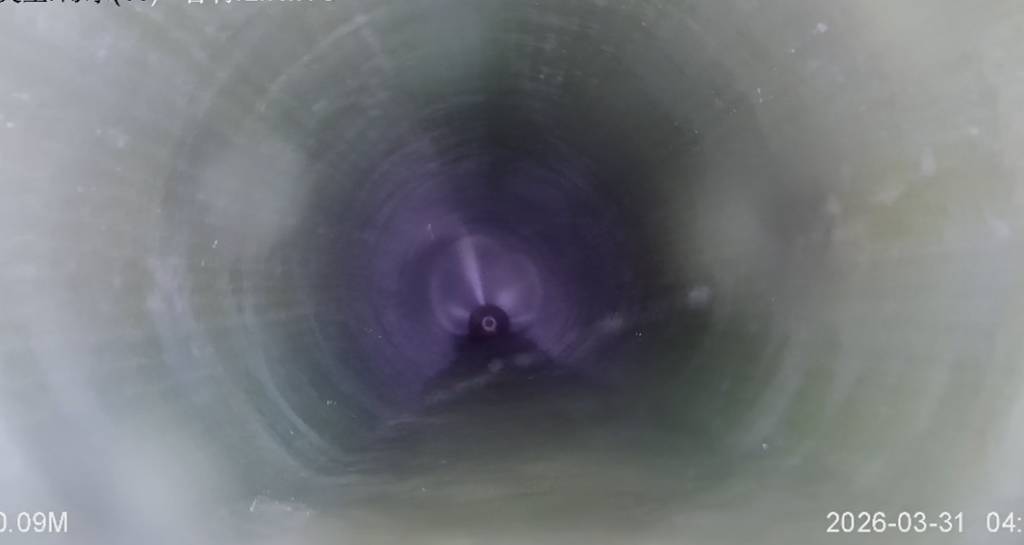
After
Project Overview
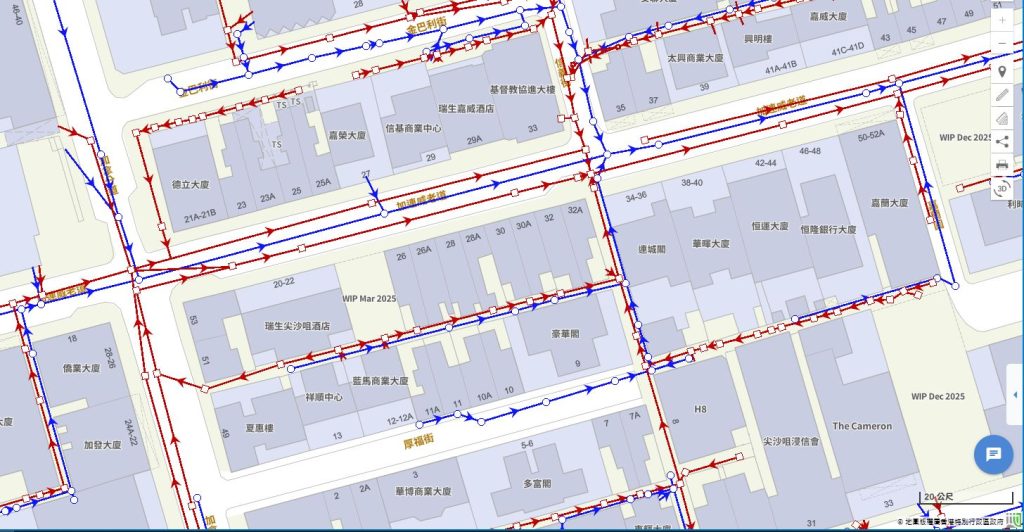
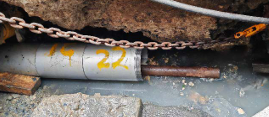
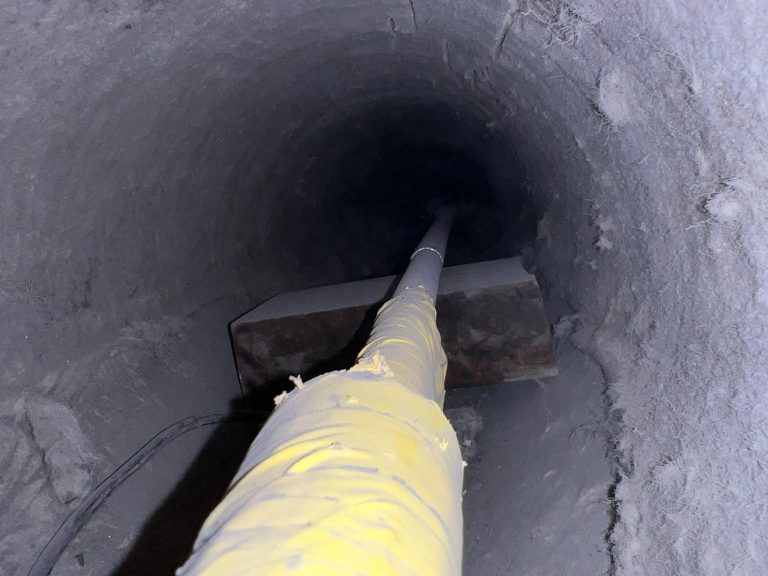
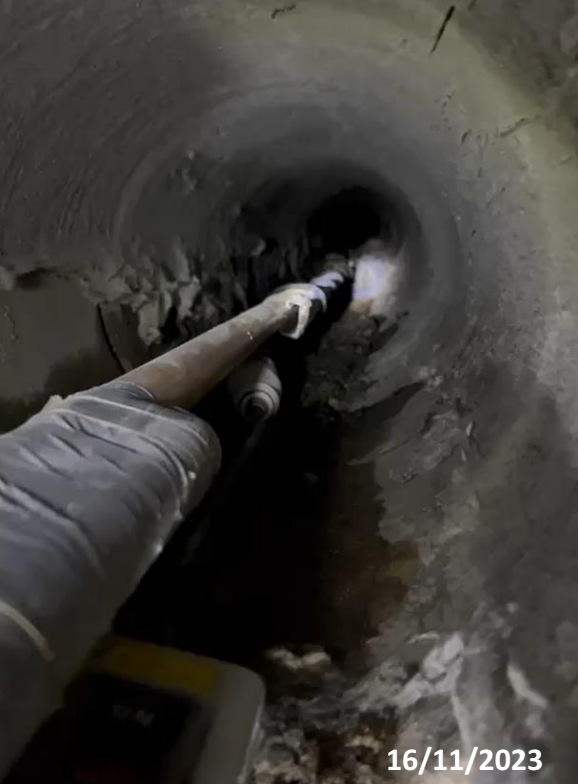
Trenchless upsizing of an existing 150mm sewer to 200mm diameter within a constrained urban service lane. The works utilised a purely mechanical pipe breaking method to fracture the host pipe and simultaneously install a new HDPE replacement pipeline — all carried out from just the two access manholes, with no open‑cut excavation along the pipe route.
Key Equipment
Hydraulic Jack (upstream manhole) – push / pull operation
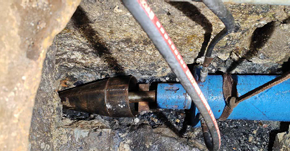
Conical Bursting Head – fractures existing pipe and expands the cavity
Gantry (downstream manhole) – guides and supports the pulling assembly
Work Process
Flow diversion and manhole preparation to accommodate equipment
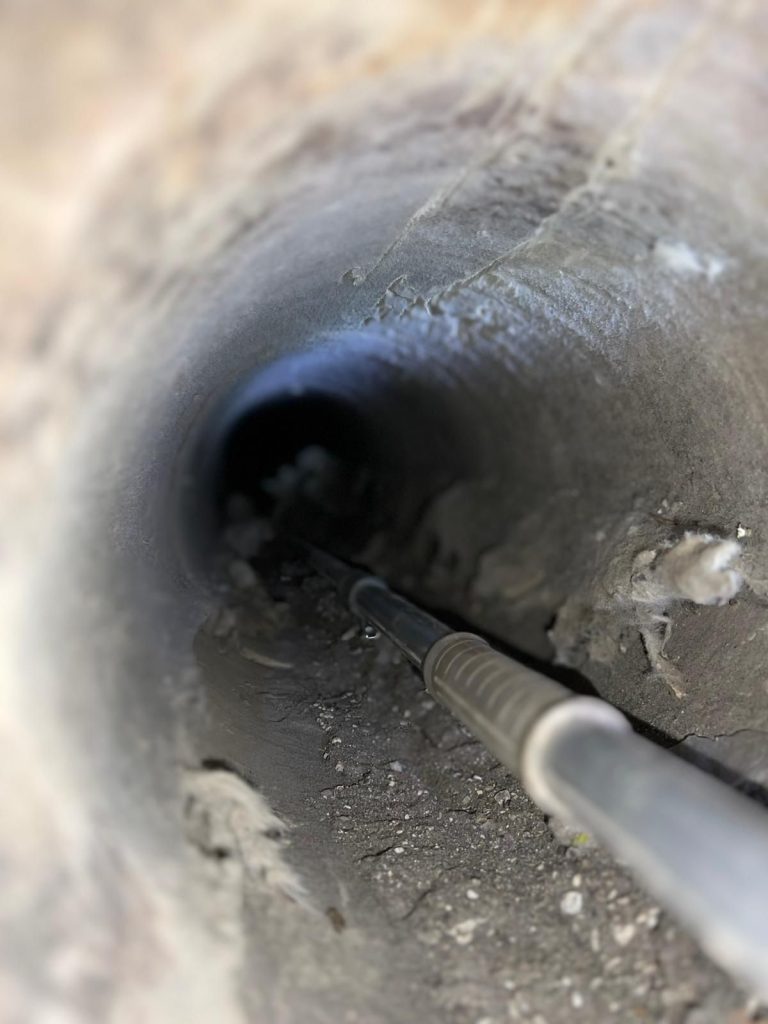
Drill rods advanced through the existing pipe from upstream to downstream manhole
Bursting head and new HDPE pipe attached to the leading rod at the downstream end
Hydraulic jack pulls the assembly back, breaking the old pipe and pulling in the new pipe in a single continuous operation
Manhole equipment removed, works area reinstated, and post‑installation CCTV survey completed to verify alignment and integrity
Why This Technique?
Zero surface disruption along the pipe run – ideal for the narrow service lane.
Minimal footprint: only the two manholes served as work points.
Efficient upsizing without the cost or risk of full open-trench excavation.
Repair Drainage Pipes along Kwun Chui Road of Proposed Residential Development at Tuen Mun Town Lot 520 at Kwun Chui Road, Area 56, Tuen Mun
2022-2024
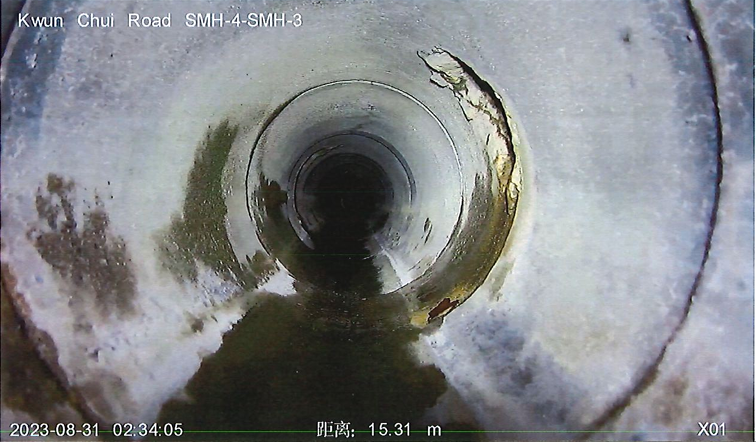
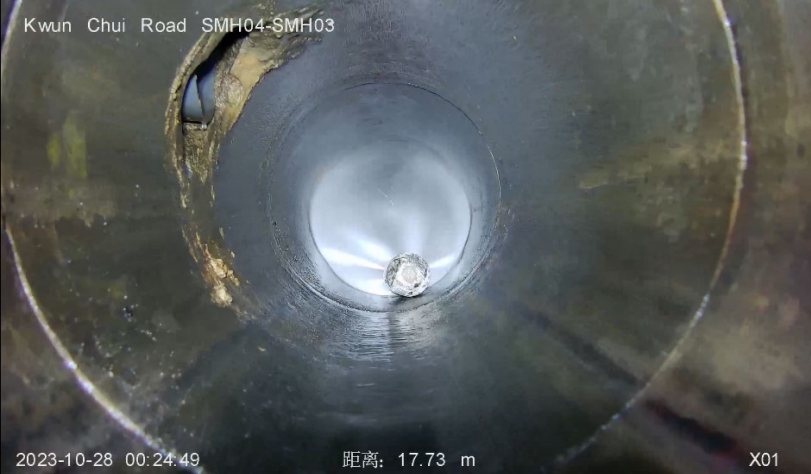
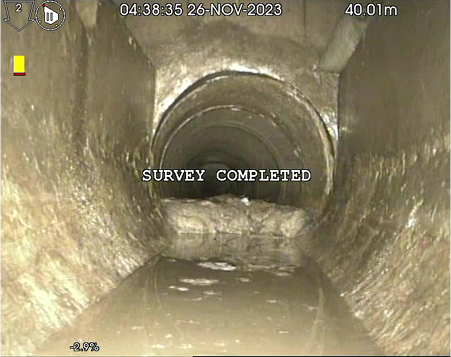
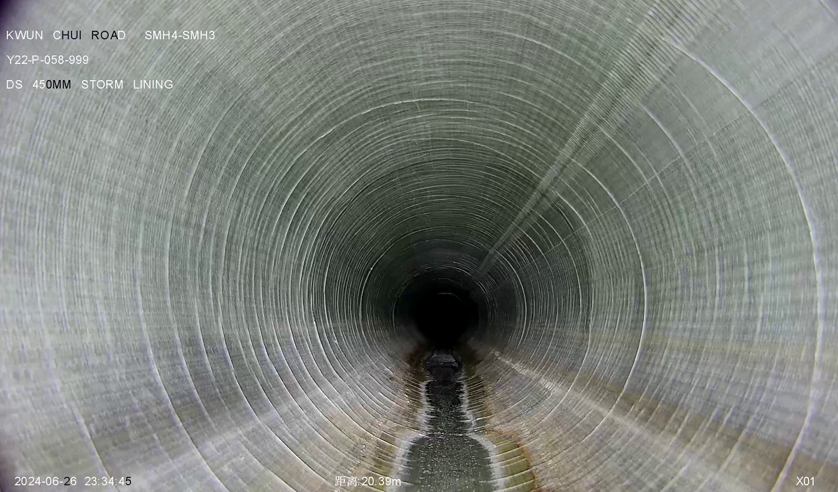
Before
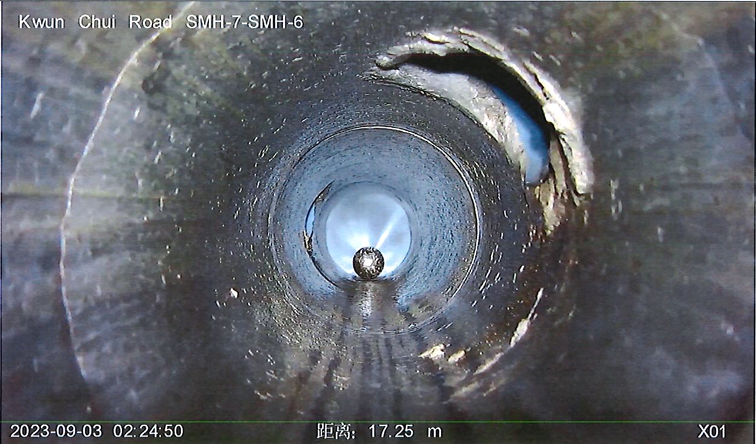
After
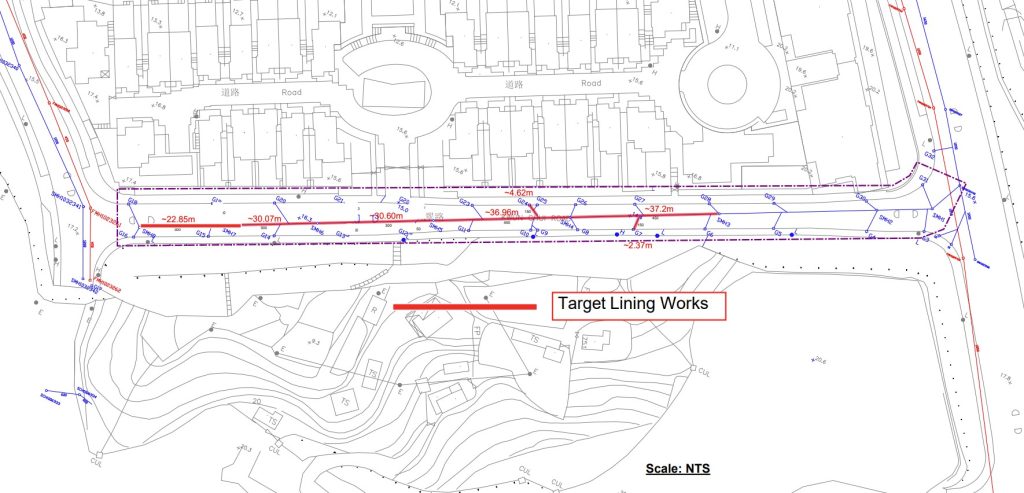
Project Title Repair Drainage Pipes along Kwun Chui Road – Tuen Mun Town Lot 520
Client Build King Construction Limited
Location Kwun Chui Road, Area 56, Tuen Mun (So Kwun Wat)
Pipe Diameters 150 mm – 450 mm
Total Length 142 m
Construction Period 2022 – 2024
Project Overview
Full trenchless rehabilitation of a stormwater drainage network serving a new residential development. The works combined robotic hydrodemolition, high‑pressure water jetting, and ambient/steam‑cured CIPP lining to restore structural integrity and flow capacity across 142 m of pipes ranging from 150 mm to 450 mm — all without open‑cut excavation.
Key Techniques
Pre‑Rehabilitation CCTV Survey High‑resolution crawler and push‑rod cameras inspected every pipeline, producing MSCC/HKCCEC‑compliant condition reports. The survey identified exact defect locations and determined which sections required hydrodemolition before lining.
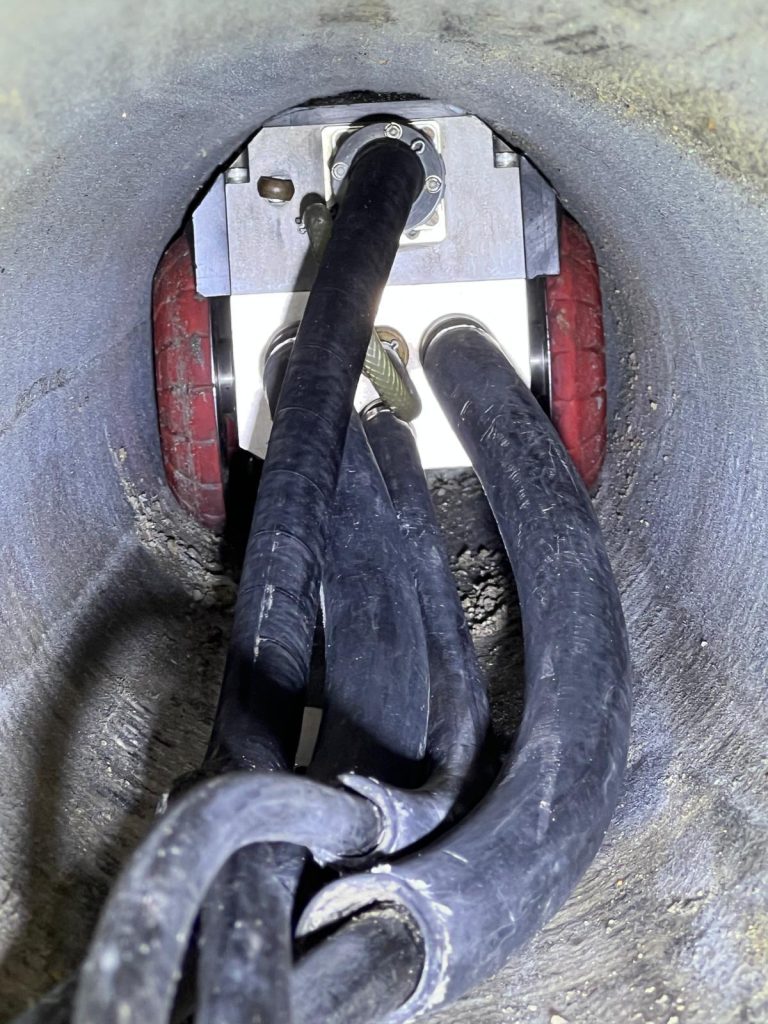
Robotic Hydrodemolition & Cleaning Hard deposits — concrete‑like encrustations, thick roots, and grease — were removed by a drainage robot equipped with 500–1,000 bar nozzles. The robot, guided by live camera, broke down obstructions while protecting the host pipe. Conventional high‑pressure jetting then flushed out loosened debris. Wheel sets and nozzles were swapped to match pipe diameters from 150 mm to 450 mm.
CIPP Lining – Ambient & Steam Curing Saertex® liners, impregnated on‑site with a vinyl‑ester resin, were pulled into place and inflated for a close‑fit against the host pipe. Shorter, smaller‑diameter runs cured at ambient pressure; longer or larger sections were steam‑cured under controlled temperature ramps. The result: a jointless, fully structural new pipe inside the existing conduit.
Post‑Rehabilitation Verification Final CCTV inspection confirmed liner integrity, correct alignment, and lateral re‑openings (cut robotically where needed). A complete as‑built package — video, defect coding, and material certificates — was delivered to the client.
Highlights
142 m of stormwater drains rehabilitated with zero open‑cut excavation
Robotic hydrodemolition removed heavily encrusted obstructions that defied conventional jetting
Ambient and steam‑cured CIPP liners restored structural grade across diameters 150 mm – 450 mm
Full confined‑space safety compliance — zero incidents in deep manholes
Works completed on programme, enabling the residential development to proceed on schedule